
Best Smart Plugs of 2026: Our Top Picks for Every Budget
The best smart plugs of 2026 — for Alexa, Google Home, Apple Home and Matter. Our top picks for every budget and setup.
Smart plugs are the easiest way to start a smart home. You don't need to rewire anything, replace switches or buy a hub — just plug in and you're done. Plug any lamp, fan, coffee maker or air purifier into a smart plug and you get remote control, scheduling and voice control instantly.
This guide covers the best smart plugs of 2026, selected for reliability, ecosystem compatibility and value for money.
Quick Picks
- Best overall: Kasa Smart Plug EP25 — energy monitoring, Matter support, works with everything
- Best for Alexa: Amazon Smart Plug — instant Alexa setup, often under $10
- Best compact: Meross Smart Plug Mini — fits tight outlets, works with all four major ecosystems
- Best for Apple Home: Wemo Mini Smart Plug — reliable HomeKit local processing
What to Look for in a Smart Plug
Ecosystem compatibility
Before buying, confirm the plug works with your voice assistant and smart home app. Most plugs support Alexa and Google Home. Apple Home (HomeKit) support is less common and usually costs more. Matter-certified plugs work across all ecosystems.
Energy monitoring
Some smart plugs track how much power each device uses. This is useful for understanding which appliances cost the most to run. Not every plug includes it — if energy monitoring matters to you, check the spec sheet before buying.
Size
Standard smart plugs block the second outlet. If you need both outlets, look for a compact or "mini" plug that leaves the adjacent socket free.
Scheduling and automation
All smart plugs support basic scheduling via their app. For more advanced automations — triggered by time, location or sensor state — you'll need one that works with your ecosystem's automation platform (Alexa Routines, Google Home automations, or Apple Shortcuts).
Hub requirement
All the plugs in this guide are Wi-Fi based and require no hub. Plug in, connect to your home Wi-Fi, done.
Our Picks
#1 Best Overall — Kasa Smart Plug with Energy Monitoring EP25
The Kasa EP25 is the smart plug we'd recommend to most people. It tracks energy usage, supports Matter (so it works with Alexa, Google Home and Apple Home), and costs around $15. Setup takes under two minutes through the Kasa app, and once it's on your network you can control it from any compatible ecosystem.
The energy monitoring dashboard shows real-time wattage and historical usage, which is genuinely useful for tracking expensive appliances. Build quality is solid and the schedule features work reliably.
#2 Best for Alexa Users — Amazon Smart Plug
If your home runs on Alexa, the Amazon Smart Plug is the simplest option available. It discovers automatically in the Alexa app with no extra configuration. There's no energy monitoring and it doesn't support Google Home or Apple Home natively, but for an Alexa-only household it's hard to beat at under $10 on sale.
Works well for lamps, fans and small appliances. Scheduling through Alexa Routines is straightforward.
#3 Best Compact — Meross Smart Wi-Fi Plug Mini
The Meross Mini is noticeably smaller than most smart plugs, which matters when your outlets are close together or you need both sockets. It supports Alexa, Google Home, Apple Home and Samsung SmartThings — one of the few budget plugs with full HomeKit support.
At around $10–12, it's excellent value for a plug that works across all four major ecosystems. No energy monitoring, but reliable scheduling and control.
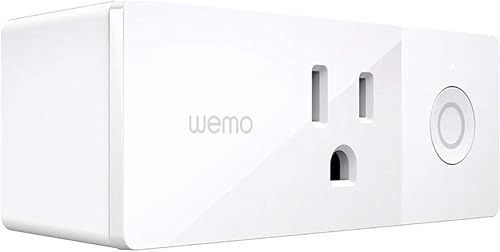
#4 Best for Apple Home — Wemo Mini Smart Plug
The Wemo Mini is a consistent choice for HomeKit households. It uses local processing, which means automations and control still work even if Wemo's servers are down or your internet is slow. That's a meaningful advantage for reliability.
It costs more than the alternatives — typically $25–30 — but the HomeKit integration is among the most stable in this category. Worth it if Apple Home is your primary platform.
What Can You Use a Smart Plug For?
- Lamps: Turn lights on and off by schedule or voice, without replacing the bulb
- Fans and heaters: Schedule them to run during specific hours, or cut power remotely
- Coffee makers: Set your coffee to start brewing before you get up
- Appliances you forget to turn off: Check status and turn off remotely from anywhere
- Holiday lights: Set a schedule once and forget it
- Energy tracking: Find out which devices are expensive to run (with monitoring plugs)
Smart Plugs vs Smart Switches
Smart plugs control individual devices plugged into them. Smart switches replace wall switches and control ceiling lights or hardwired fixtures. If you want to control a lamp or appliance, use a smart plug. If you want to control overhead lighting without swapping bulbs, use a smart switch. Both can coexist in the same setup.
Do Smart Plugs Work Without Wi-Fi?
No — all Wi-Fi smart plugs require an internet connection for remote control, voice commands and app access. However, if you've set a schedule on the plug itself, some models will continue running that schedule locally even if Wi-Fi drops.
Frequently Asked Questions
Do smart plugs work with any outlet?
Yes, they work with standard US outlets (Type A, 120V). Check wattage limits before using with high-draw appliances — most plugs support up to 1800–2400W, which covers the vast majority of household devices.
Can smart plugs be hacked?
Like any internet-connected device, smart plugs have a theoretical attack surface. Buying from established brands, keeping firmware updated and using a separate IoT network reduces risk significantly.
Do smart plugs use power when the device is off?
Yes, but very little — typically 1–2 watts in standby. This is negligible in cost terms but worth knowing.
Can I use a smart plug outdoors?
Only with outdoor-rated smart plugs (IP44 or higher). The plugs in this guide are for indoor use only.
Where to Buy


Affiliate links — we may earn a commission at no extra cost to you.


